October 2nd, 2026
Looking back at Day 81, I honestly don’t even think I placed a trade. And this is exactly why I’ve been getting so frustrated with my strategy. It’s becoming unnecessarily complicated, and I’m realizing that using Fibonacci levels alongside MACD is sometimes doing more harm than good.
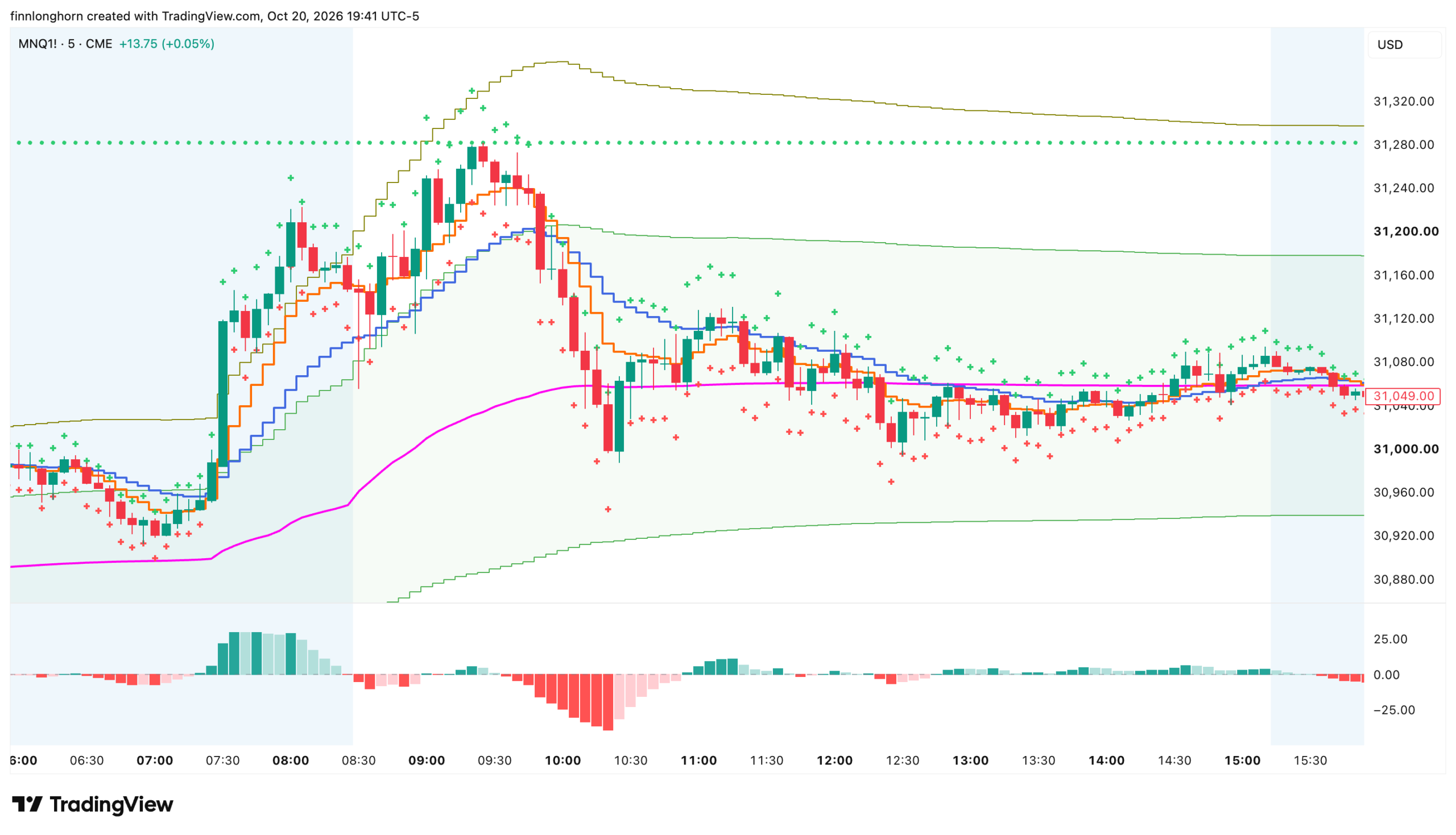
The biggest problem is that MACD is simply too late. By the time it confirms a move, the best entry has often already passed. That leaves me either chasing price at a much worse entry or sitting on the sidelines watching a perfectly good opportunity disappear.
What’s frustrating is that MACD does serve a purpose. It helps keep me out of bad trades, especially during choppy market conditions. But there’s a trade-off. The same indicator that protects me from unnecessary losses can also prevent me from entering some of the best trades of the day.
On Day 82, the morning offered what appeared to be two potentially good trading opportunities. Unfortunately, the combination of Fibonacci levels and delayed MACD confirmation kept me from taking advantage of them. By the time everything aligned, the entries were no longer attractive.
This is becoming an important lesson in my trading journey. More confirmation doesn’t necessarily mean better trading. Sometimes, adding too many conditions creates hesitation and causes me to miss the very opportunities my strategy is designed to capture.
I’m beginning to question whether MACD should remain part of my system at all, at least as an entry requirement. I still appreciate its ability to filter out questionable setups, but I need something that allows me to recognize momentum earlier without sacrificing too much protection.
Ultimately, Day 82 reinforced something I’ve been noticing throughout my backtesting: a good trading strategy needs to be selective, but it also needs to be responsive. There’s no benefit in identifying a great trade only after the opportunity has already passed.

Day 81 Travel Poster
Total Profit: $
MNQ Chart